


Delving into the realm of siding financing options, this comprehensive guide aims to provide a detailed look at the various ways homeowners can finance their siding projects. From traditional bank loans to specialized financing programs, this overview covers all you need to know to make an informed decision.
As we navigate through the different types of financing, eligibility requirements, pros and cons, and tips for selecting the right option, you'll gain valuable insights into the world of siding financing.
Types of Siding Financing
When it comes to financing your siding project, there are several options to consider. From traditional bank loans to siding-specific financing programs, each option has its own benefits and considerations. Let's explore the different types of siding financing available to homeowners.
Traditional Bank Loans
- Traditional bank loans are a common way to finance home improvement projects, including siding installation.
- These loans typically offer fixed interest rates and repayment terms, making it easier to budget for the project.
- Homeowners can apply for a bank loan by submitting financial documents, such as income statements and credit history, to the lender.
- Approval for a bank loan may be based on the borrower's credit score, income, and debt-to-income ratio.
Siding-Specific Financing Programs
- Siding-specific financing programs are designed to help homeowners finance their siding projects with specialized loan options.
- These programs may offer lower interest rates and flexible repayment terms compared to traditional bank loans.
- Homeowners can apply for siding-specific financing by working with a contractor or home improvement lender that offers these programs.
- Approval for siding-specific financing may be based on the value of the home, the cost of the siding project, and the borrower's credit history.
Home Improvement Loan Process
- When applying for siding financing through a home improvement loan, homeowners will need to gather necessary financial documents, such as proof of income and credit history.
- Homeowners can then research and compare different lenders that offer home improvement loans for siding projects.
- After selecting a lender, homeowners can submit their loan application and wait for approval, which may vary depending on the lender's requirements.
- Once approved, homeowners can use the loan funds to finance their siding project and make regular payments according to the loan terms.
Requirements for Siding Financing

When it comes to obtaining siding financing, there are certain requirements that applicants need to meet in order to qualify for the funding. These requirements typically include factors like credit score, income verification, and documentation.
Credit Score Range
In general, the credit score needed to qualify for siding financing can vary depending on the lender and the specific financing option. However, a good credit score is usually required to secure favorable terms and interest rates. For traditional siding financing options, a credit score of 620 or higher is often needed.
On the other hand, for government-backed loans like FHA loans, a lower credit score may be accepted.
Documentation
When applying for siding financing, borrowers are typically required to provide certain documentation to support their application. This may include proof of income, tax returns, bank statements, and proof of identity. Lenders use this documentation to assess the borrower's financial situation and ability to repay the loan.
Additionally, some lenders may require a down payment or collateral to secure the financing.
Pros and Cons of Siding Financing

When considering siding financing options, it is important to weigh the advantages and disadvantages to make an informed decision.
Advantages of Using Financing for Siding Projects
- Allows homeowners to complete siding projects without having to pay the full cost upfront.
- Enables homeowners to choose higher quality materials or more extensive siding options that may have been out of budget otherwise.
- May increase the value of the home, potentially leading to a higher resale value in the future.
- Financing options can offer flexible payment terms to suit different financial situations.
- Can help homeowners address urgent siding issues promptly to prevent further damage.
Potential Drawbacks or Risks Associated with Siding Financing
- Accrued interest over time can increase the overall cost of the project.
- Defaulting on financing payments can negatively impact credit scores and lead to additional fees.
- Some financing options may have hidden fees or penalties for early repayment.
- Longer repayment terms may result in paying more interest in the long run.
- Not all homeowners may qualify for favorable financing terms based on credit history or income level.
Impact of Siding Financing on the Overall Cost of a Project
Siding financing can impact the overall cost of a project by adding interest and fees to the initial amount borrowed. While financing allows for flexibility in payment, it is essential for homeowners to calculate the total cost of financing over time to determine if it is a cost-effective option for their siding project.
Tips for Choosing the Right Siding Financing Option
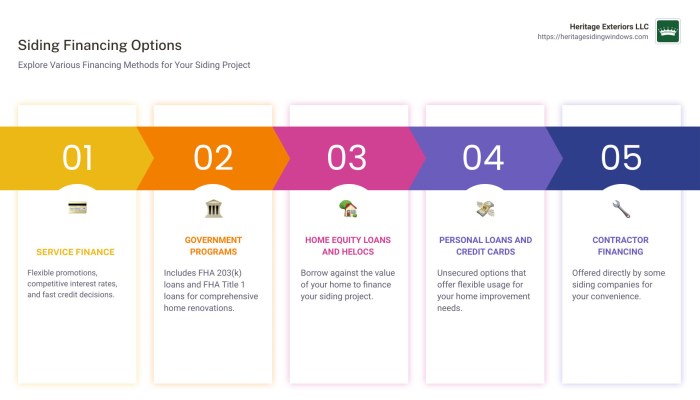
When it comes to selecting the best siding financing option for your project, there are several factors to consider. By following these steps, you can make an informed decision that suits your budget and needs.
Compare Interest Rates and Repayment Terms
Before committing to a siding financing option, it's essential to compare interest rates and repayment terms offered by different lenders. Lower interest rates can save you money in the long run, while favorable repayment terms can make the monthly payments more manageable.
Negotiate Terms and Conditions with Lenders
Don't be afraid to negotiate terms and conditions with lenders to secure a better deal for your siding financing. You can discuss adjusting the repayment schedule, interest rates, or any additional fees to find a solution that works for both parties.
Final Summary
In conclusion, siding financing offers homeowners the flexibility to enhance their properties without immediate financial strain. By weighing the advantages and drawbacks, and following the tips provided, you can embark on your siding project with confidence.
FAQ
What are the typical eligibility criteria for siding financing?
Eligibility criteria usually include factors like credit score, income level, and existing debts. Lenders may also consider the value of your home.
How does siding financing impact the overall cost of a project?
While financing can make the upfront cost more manageable, it may increase the total cost due to interest payments. It's essential to factor this into your budget.
What documentation is usually required when applying for siding financing?
Commonly required documents include proof of income, identification, proof of homeownership, and details about the siding project.